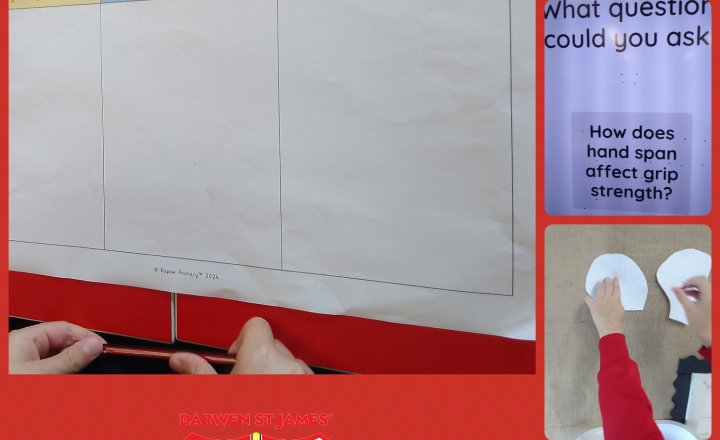
Year 3 - Science - Planning An Investigation
Year 3 have been busy working like real scientists this week! The children are currently planning an exciting investigation to find out if there is a link between our hand span and our grip strength. They have been discussing how to make it a fair test, predicting what might happen, and deciding how to measure their results accurately. We cannot wait to get hands-on with the testing phase next week and see if our predictions match the data. Stay tuned for the results!
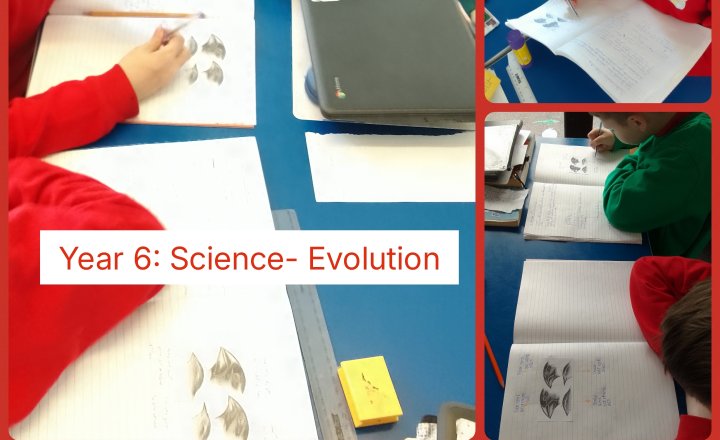
Year 6: Science - Evolution
This week in Science, year 6 have been learning about evolution. We looked at Charles Darwin's voyage to the Galapagos, and the adaptations he found in local species of finch.
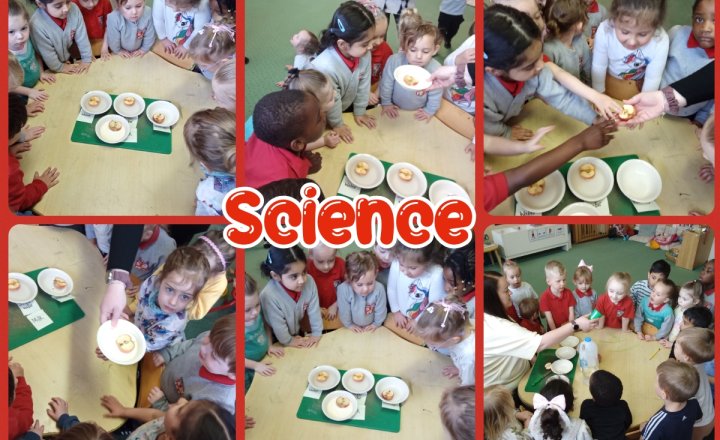
Nursery And Pre-School - Science - Food Decomposition
Over the last week, the children in Nursery and Preschool have become little scientists, taking part in a two-part investigation into how things change and decay. We wanted to find out what would happen to an apple when left in different environments, so we set up a special experiment using four slices. One was placed in milk, one in water, one in sugar water, and the final piece was left out in the air. To start our investigation, the children were encouraged to make their own predictions. We had some wonderful ideas, with some children thinking the apples would change colour and turn brown, while others wondered if the seeds inside might start to grow! This was a great way for the children to practice their "thinking skills" and imagine what might happen over time. After waiting for a whole week, we gathered back together to see if our predictions were right. We used our senses to explore the changes, taking a good look, feeling the textures, and even having a little sniff of the different bowls! The children were fascinated to see how some apples had stayed firm while others had become mushy or changed colour. We spoke about what we could see and smell, and the children enjoyed sharing their surprises when the results were different from what they first expected. This hands-on experiment was a fantastic way for the children to observe the passage of time and the natural process of change in the world around them.
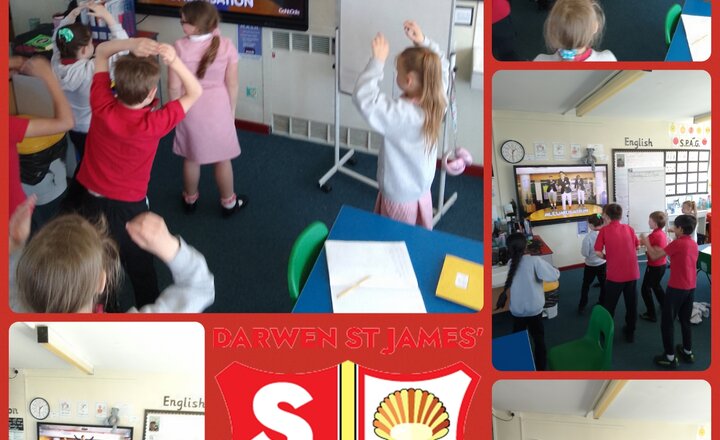
Year 4 Geography and Science
This half term, Year 4 have really enjoyed their cross-curricular learning with similar themes between different subjects. We have conducted a water cycle experiment in Science to see the process in real life, and applied this to our Geography topic, learning about rivers. Our favourite part of this is the water cycle dance! The actions and song really help us remember the key words and different processes.
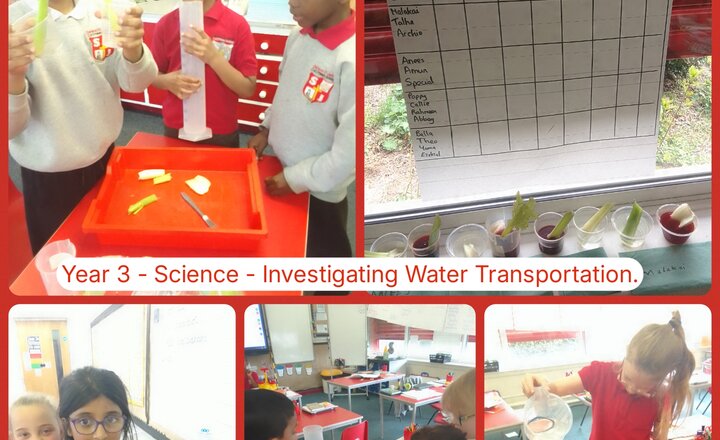
Year 3 - Science - Investigating Water Transportation
Science in Action: Water Transportation Investigation Year 3 have been putting their scientific inquiry skills to the test this week as they investigate how water travels through plants. To make this invisible process visible, the classroom has been transformed into a colorful laboratory. Using celery stalks and vibrant food dyes, the students set up a classic transpiration experiment. By placing the stalks into coloured water, they are able to observe how the plant's internal systems—specifically the xylem—pull moisture upwards against gravity.
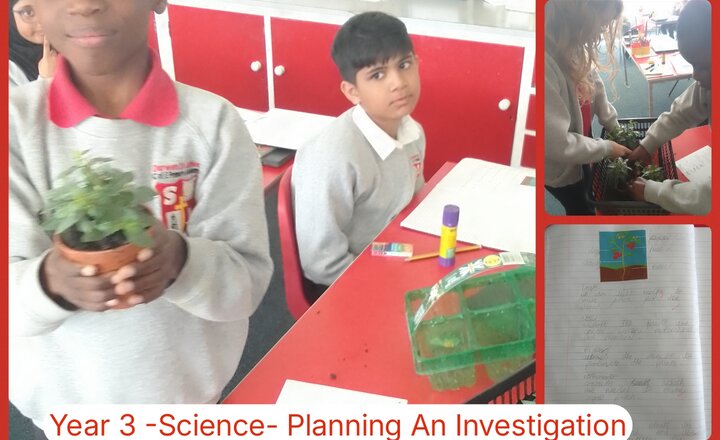
Year 3 - Science - Planning An Investigation
Budding Scientists at Work! Our Year 3 class has officially launched their latest scientific investigation. We are diving into the world of botany to answer a central question: How does the amount of water affect how a plant grows? The children have been busy planning their experiment, ensuring it is a "fair test" by: Standardizing Conditions: Using identical seeds, the same type of soil, and placing every pot in the same sunny spot. Controlling the Variable: Carefully measuring out different specific amounts of water for each plant to observe the differences.
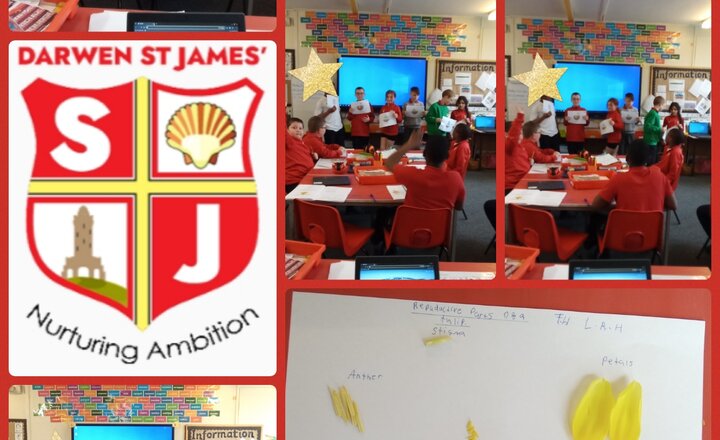
Year 5 Science - The Life Cycle of a Flowering Plant
Science in Action: From Seeds to Stems! Our classroom was buzzing with discovery this week as we dove deep into the fascinating world of botany. We kicked things off with a human timeline, where students held up posters representing the different stages of a flowering plant's lifecycle. It was a true team effort as the rest of the class debated and directed their peers into the perfect order—from tiny seed to full bloom! Once we mastered the "big picture," we got our hands dirty with some tulip dissections. Using careful precision, we identified the hidden reproductive parts of the flower, labelling the anthers, filaments, and ovaries to understand how plants create the next generation. Highlights of our hands-on learning: Lifecycle Logic: Mapping out growth through collaborative problem-solving. Flower Anatomy: Peering inside tulips to find the "machinery" of nature. Minty Experiments: Taking stem cuttings from mint plants to explore asexual reproduction. We’re currently waiting to see if our "clones" will take root and grow into exact copies of the original plant! Check out our young scientists in the photos as they explore the wonders of the natural world!
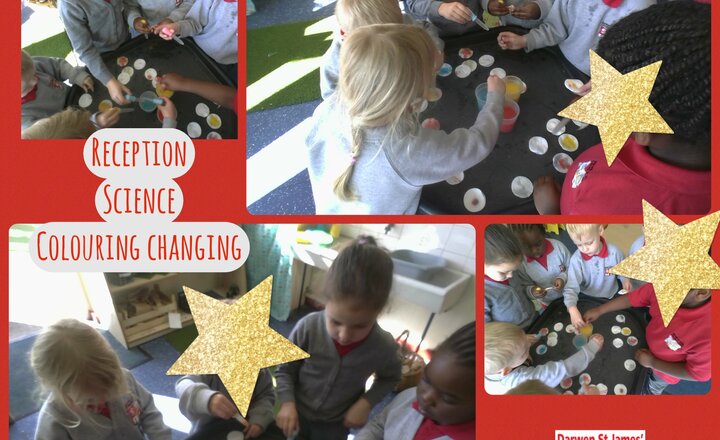
Reception- Science-Colour Changing
In the vibrant buzz of the science corner, the Reception children transform into mini-scientists as they explore the magic of color mixing. With focused expressions and developing fine motor skills, they carefully use perpets to squeeze, suction, and release primary-colored water onto soft white cotton pads. This hands-on experiment allows them to observe capillary action firsthand as the fabric drinks up the liquid. As the vibrant reds, blues, and yellows bleed into one another, the children witness the "wow" moment where new secondary colors emerge. These dyed pads aren't just an experiment; they serve as the delicate, marbled petals for their handmade flowers. By blending scientific inquiry with creative art, the children learn to make predictions and observe changes, all while crafting a beautiful garden of their own making.
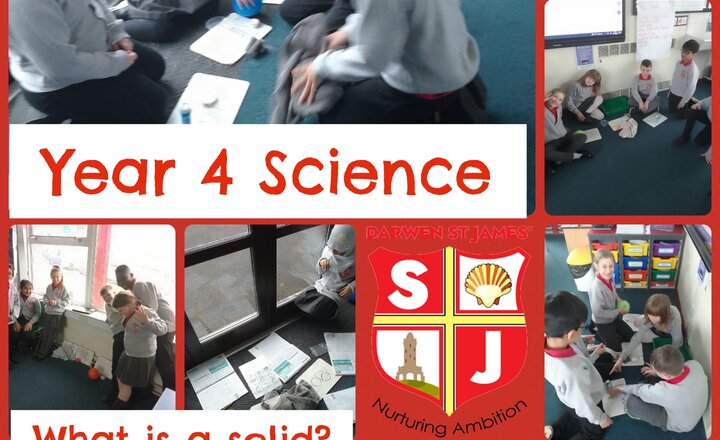
Year 4 Science - What is a solid?
Year 4 have thrown themselves in to their new Science topic, States of Matter. We began our inquiry by testing different items and whether they would classify as a solid or not. Year 4 demonstrated some excellent reasoning skills to explain their points in relation to the properties of a solid.
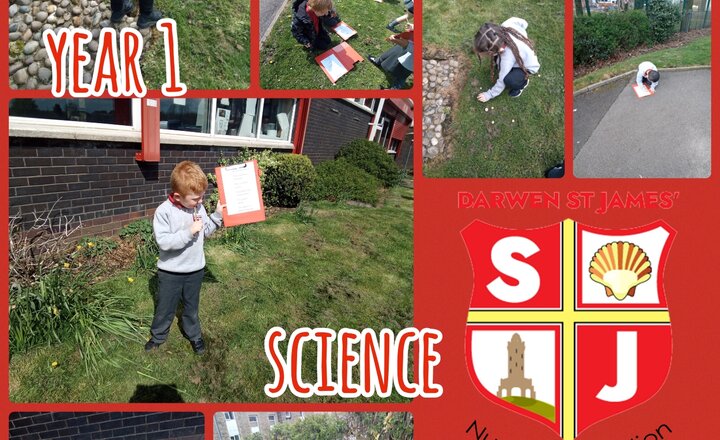
Year 1 - Science - Plants
This term, Year 1 are exploring their botanical skills as they begin our new science topic on plants. The children started by recapping their prior knowledge of plant parts, but things got interesting when Mrs Cookson challenged them to draw a flower; they quickly realised that not all flowers look the same, which left them feeling a little puzzled! To solve the mystery, the class headed outside to explore our school grounds, investigating the wonderful variety of flowers and plants growing right on our doorstep.
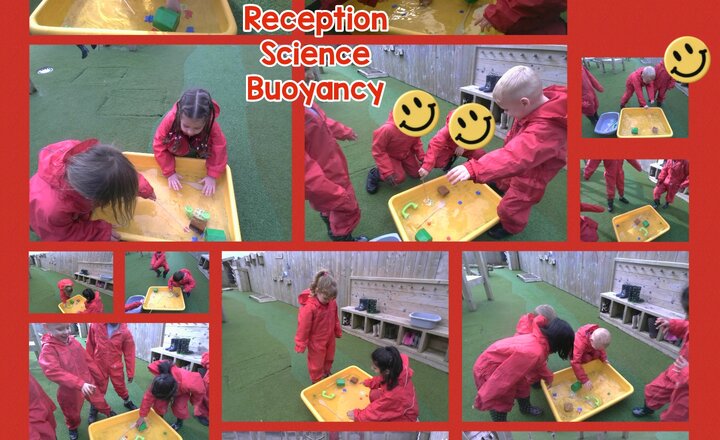
Reception- Science- Buoyancy
This week, our budding scientists in Reception took their learning into the fresh air to dive into the world of buoyancy. Armed with a variety of treasures found around the garden and indoors—from heavy stones and twigs to hollow plastic balls—the children practiced the art of making predictions, eagerly guessing which items would stay on the surface and which would sink to the bottom of the water trays. There were plenty of splashes and cheers as they tested their theories in real-time! Through this hands-on exploration, the children began to grasp the concept of density, discovering that it isn't just about size, but how "heavy" an object is for its size. By comparing how a large, light leaf dances on the surface while a tiny, solid pebble plunges downward, our young learners are already mastering the foundational physics of floating and sinking.
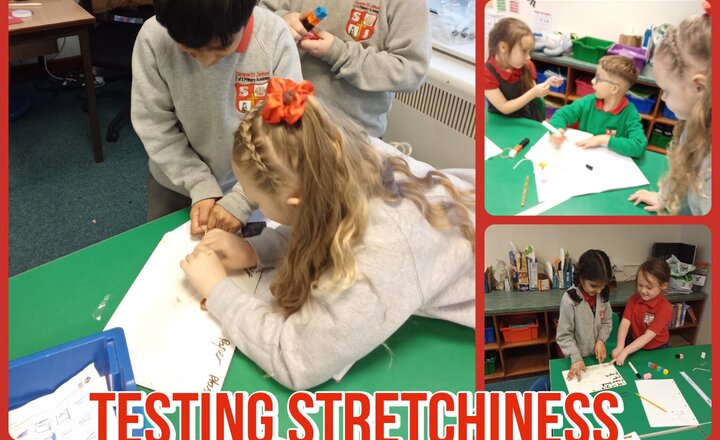
Year 2 Science: Testing Stretchiness
Our Year 2 scientists put materials to the ultimate test! Working in expert teams, we investigated which everyday items have the best elasticity. From paper and string to plastic and rubber, the children used their "fair testing" skills to see which would snap and which would stretch! Brilliant observations and even better teamwork, Year 2!
.png)