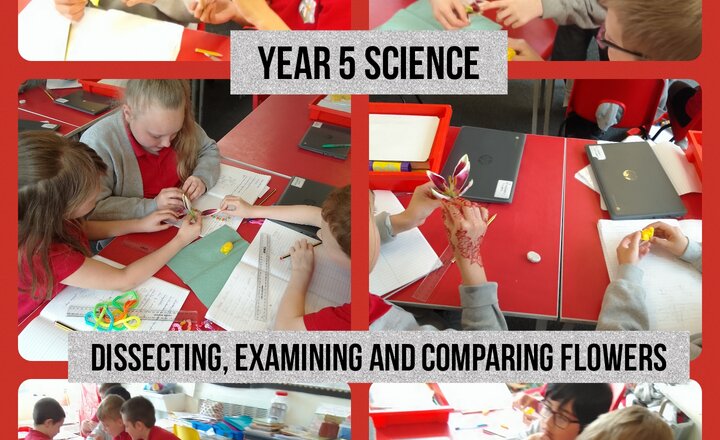
Year 5 Science: Dissecting, Examining and Comparing Flowers
Year 5 scientists are currently immersed in the world of life cycles, and this week's investigation centered on the remarkable journey of a plant's life. To bring this concept to life, we conducted a comparative study of two beautiful flowers: tulips and lilies. Students actively identified the crucial male and female components responsible for plant reproduction in each specimen. By closely examining and contrasting these parts, they developed valuable insights into the similarities and differences in the reproductive strategies of these two flowering plants.
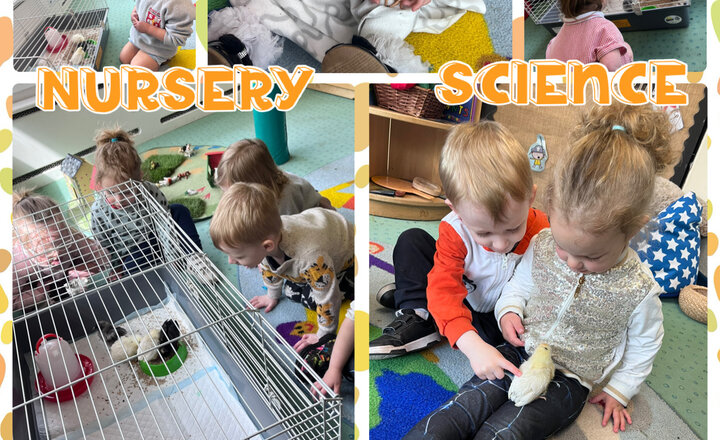
Nursery - Science - Chicks! Enrichment Lesson
This week we have had some very tiny visitors in nursery, 4 chicks! During the visit from the chicks the children showed significant interest in the new arrivals. They spent a considerable amount of time observing the chicks in their enclosure, pointing and using a variety of nouns to describe their actions, "eating " while watching a chick peck at food, "drinking" as one dipped its beak into the water, and "running" as they moved quickly around their space. When given the opportunity to gently hold a chick, the children approached with caution but followed instructions to use "kind hands and quiet voices. They stroked the chick's head gently with one finger, maintaining a quiet voice as prompted. This demonstrates developing self-regulation in managing their own behaviour and understanding the need to be gentle with living things. We discussed the life cycle of the chicks, the children recalled that the chicks came out of an egg and we spoke about what the chicks would look like when they grow. The children found the chicken out of a group of farm animals and linked this with the growth that we would see!
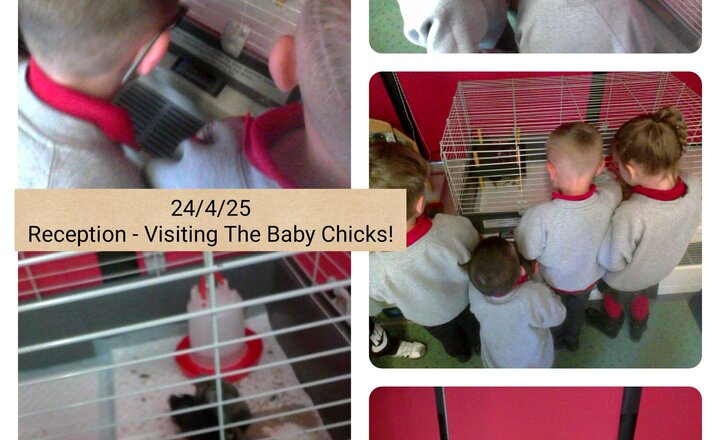
Reception - Understanding Our World - Visiting The Chicks!
Our classroom was bursting with excitement (and a few adorable little peeps!) this week as the wonderful Reception class came to visit our newly hatched baby chicks over in Pre-School. Their little faces lit up as they carefully peered into the brooder, their eyes wide with wonder at the tiny, fluffy creatures wobbling around. We talked about how to be gentle and quiet around the chicks, and the children were so incredibly well-behaved, showing real kindness and curiosity. There were lots of "oohs" and "aahs" as the chicks cheeped and explored their temporary home. We even got to see a few brave chicks take their first tentative steps! It was a fantastic opportunity for the Reception children to learn about where food comes from, the life cycle of a chicken, and the importance of caring for living things. We answered lots of brilliant questions, from "Are they soft?" (yes, very!) to "What do they eat?" (special chick crumb, of course!). It was such a joy to share this special experience with the younger children and witness their fascination with nature.
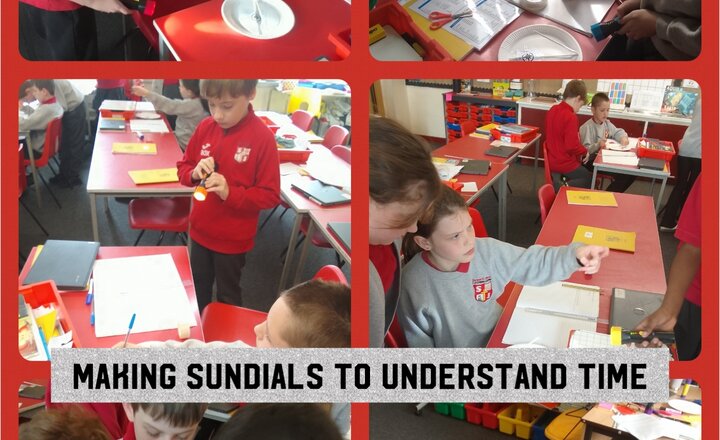
Year 5 Science - Making Sundials to Understand Time
Exploring the science of time! Year 5 students create and calibrate sundials to deepen their understanding of the passing of time and how this relates to the rotation of the Earth.
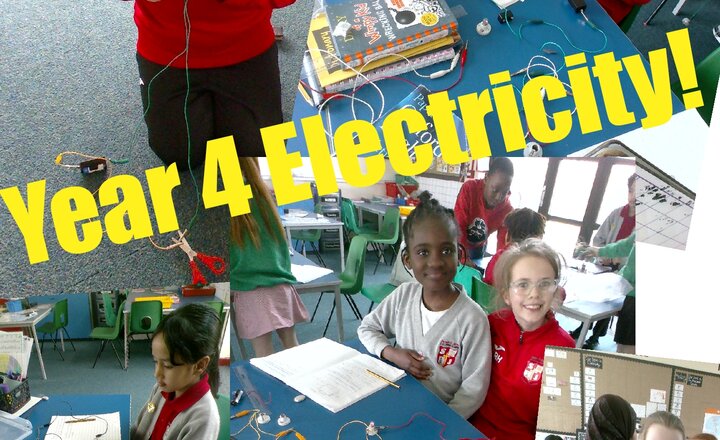
Year 4 - Science - Electricity
Year 4 have been looking at electricity as part of our Science topic these past few weeks. We have become rather skilled at identifying the different components needed to create a circuit and can troubleshoot issues that may make a bulb not work. This week we have looked at insulators and conductors and were able to put our predictions to the test in our practical activity, where we were able to test our ideas out!
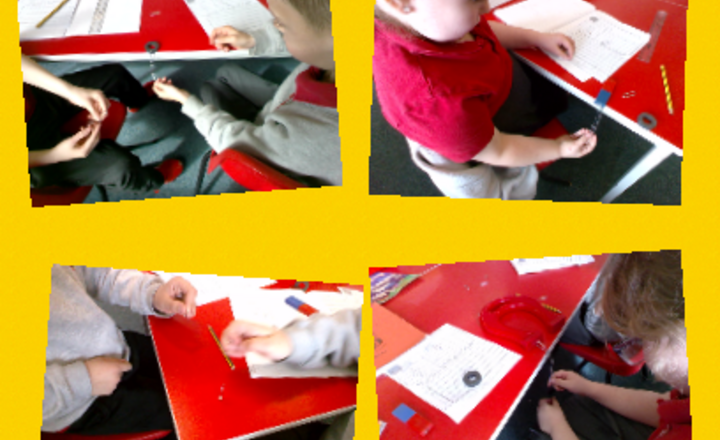
Year 3 Science - Investigating The Strengths Of Magnets
Year 3 scientists investigated which magnet was the strongest! They compared horseshoe, button, and block magnets by seeing how many paperclips each could pick up.
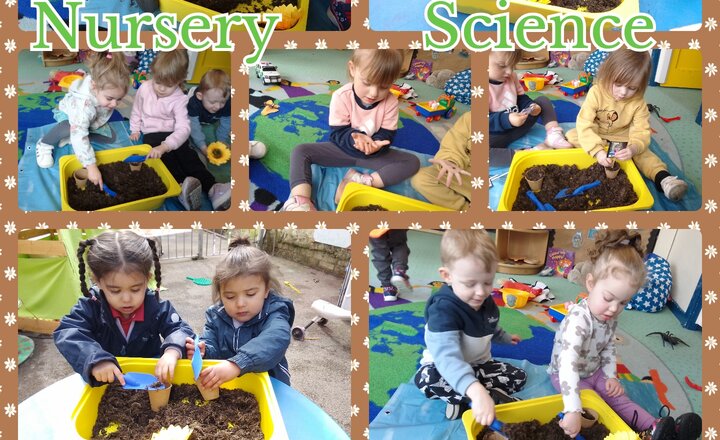
Nursery - Science - Planting Sunflower Seeds
Look at what Nursery class did this week! We planted tiny sunflower seeds, and the children learned how to care for their seeds, gaining the understanding that they need water and sunshine to grow big and strong, just like us! By engaging the children in this hands-on activity, they gain a valuable understanding of the life cycle of a plant and develop a sense of wonder about the natural world. We have also planted a class sunflower that we will be taking care of and hope to monitor it over the coming weeks to observe changes in its growth and appearance!
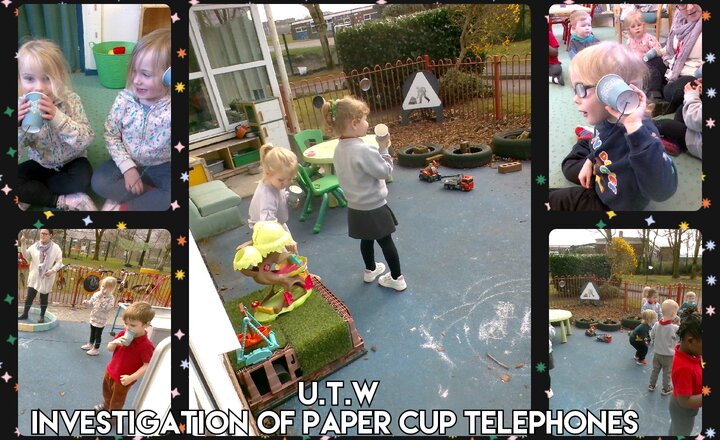
Pre-School Science Paper Cup Telephones
Today in understanding the world we looked at different types of telephones and discussed what we use telephones for, some of the children said they play games on their parents mobile phones and some said they watch tv on them. We all looked at preschools telephone and phoned Mrs Murray to say hello and had a discussion around different types of telephones and why we might use them. Investigating paper cup telephones is a classic and engaging way to explore the principles of sound and vibration in a very fun way, This encourages children to use descriptive language to talk to their partners and promotes turn-taking and listening skills through the activity.
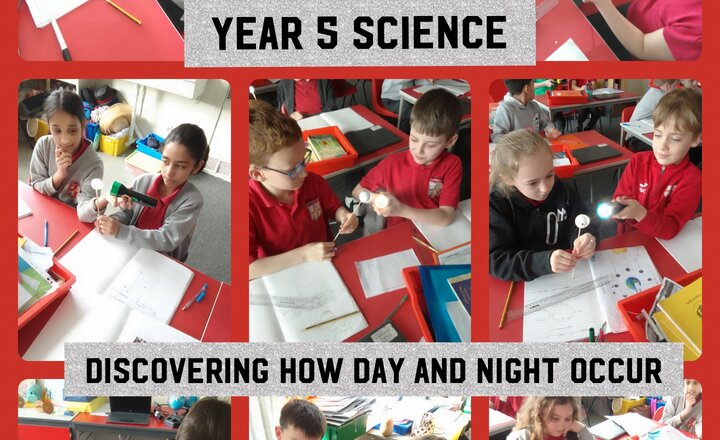
Year 5 Science - Discovering How Day and Night Occur
This week in Science, Year 5 modeled the Earth's rotation on its axis and the resulting day-night cycle using polystyrene spheres and torches. Students marked the Northern Hemisphere with a cross and then rotated the spheres anticlockwise, simulating the Earth's movement away from the 'sun.' Upon hearing 'freeze,' they identified whether their marked location was experiencing day or night.
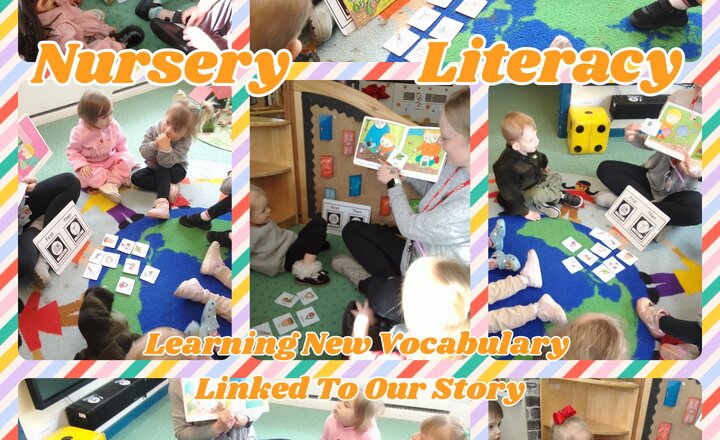
Nursery - Literacy - Learning New Vocabulary Linked To Our Story
This week, Nursery class have been reading a new story called 'Grow it!'. This means we have been able to explore some new vocabulary! We discovered some tricky, unfamiliar worlds like 'compost' and 'trowel' among others. Understanding and being familiar with these words enables children to comprehend the story and conversations surrounding the events in our book. Nursery class have done really well copying and remembering the new vocabulary and have also been able to find the pictures linked to the new words in our book. Well done everyone.
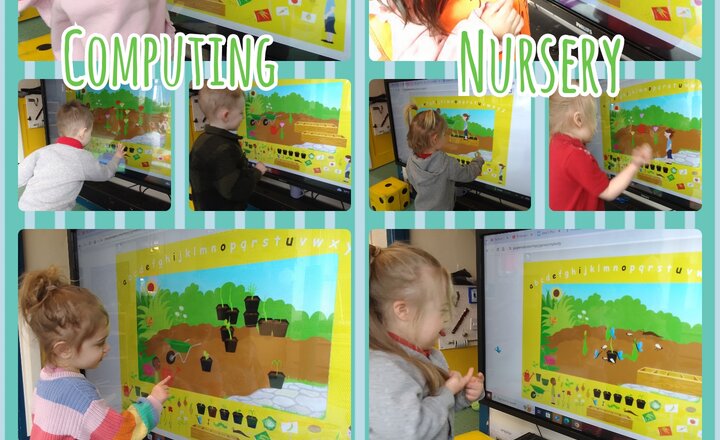
Nursery - Computing - Exploring The Garden Centre
Linked with our spring story 'Grow it!', the children have been exploring the garden centre on purplemash. Understanding a tap and drag movement to place different items into the garden. The children discovered many different plants, mini beasts and equipment that we have been learning about this week and were given the opportunity to put their new vocabulary knowledge into practice. The children observed the effects that the watering can had on the bulbs and seeds, watching the flowers grow once they had been watered, this was definitely the favorite feature!
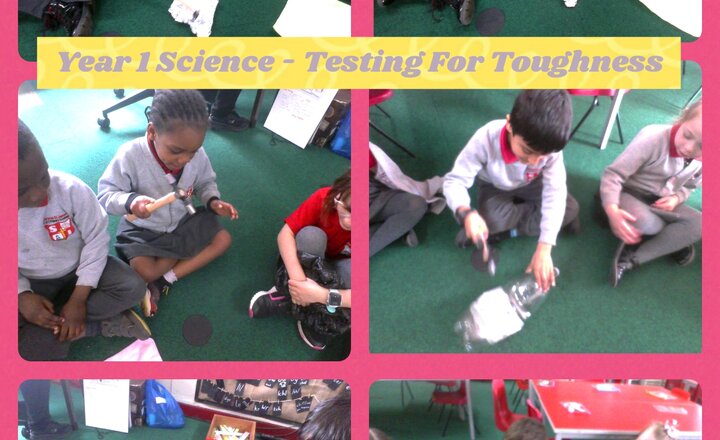
Year 1 - Science - Testing For Toughness
Year 1 carried out an investigation into toughness, aiming to identify which materials were strong and which were weak. As part of a fair test, they struck each material with a hammer and observed the results. They discovered that some materials, like plastic bottles, changed shape, while others, such as metal bowls, remained unchanged.
.png)