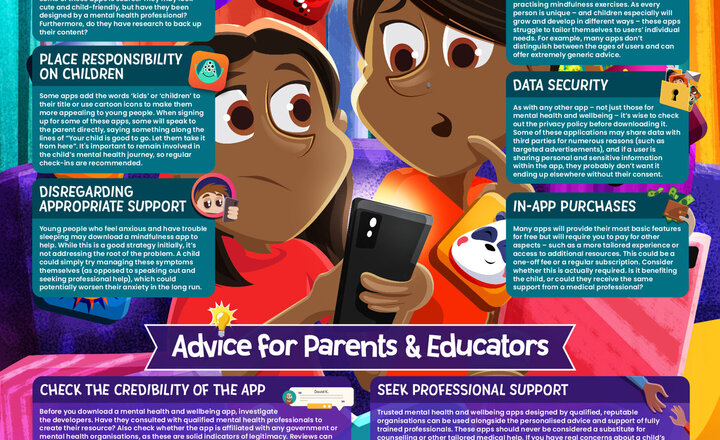
What you need to know about: Mental Health & Wellbeing Apps
The rise in awareness of mental health issues has given way to several easily accessible services to help with such problems – for example, wellbeing apps promising to serve as an assistive tool for anyone in need of support. While these can be useful to some, there are a few risks which are important to consider – especially if a child or young person is using the app. Of course, it can be tricky to know exactly where the safety concerns lie with a service intended to help and support its users – and it can be harder still to safeguard younger users. This free guide breaks down the online safety risks of mental health and wellbeing apps, before letting you know how best to keep children and young people safe if they ever wish to use these services.
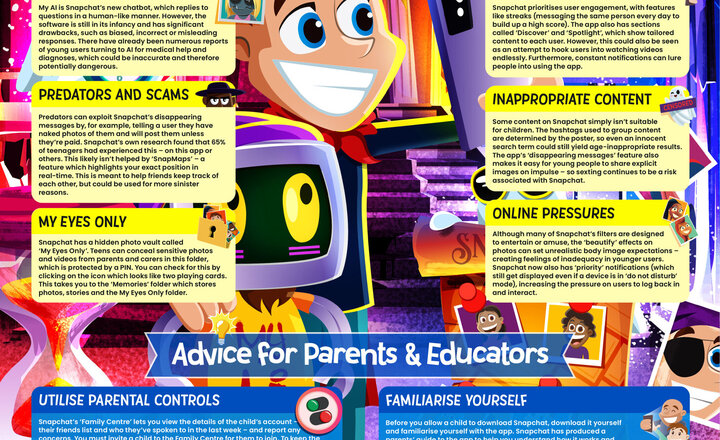
Wake Up Wednesday
As one of the most popular messaging apps available, Snapchat sees an enormous amount of usage across the globe – with a significant number of those utilising the platform being under 18. For that reason, it’s important to understand the potential risks to younger users when spending time on this app. Of course, it can be difficult to identify every hazard associated with the platform, let alone what can be done to mitigate these concerns. Our guide lays out the key online safety risks of Snapchat, as well as how to safeguard young people while they use the app.
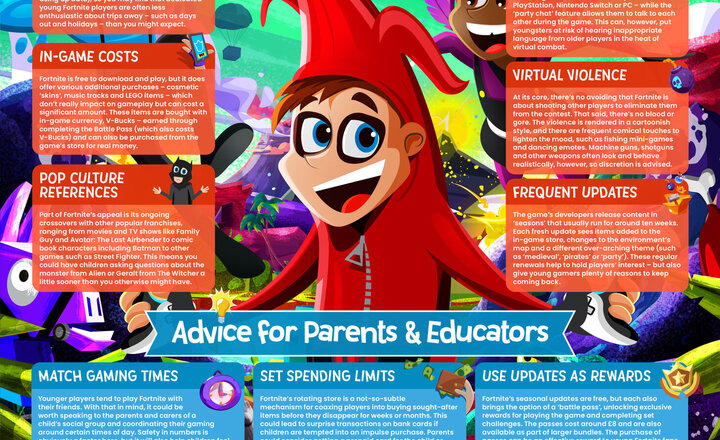
Online Safety - Fortnite
Over the years, Fortnite has become a household name in the gaming community. It was one of the first titles in the ‘battle royale’ subgenre, where players are thrown into a chaotic free-for-all on a sprawling map and fight until only one remains. Its cartoonish presentation and satisfying gameplay loop make it a potentially attractive choice for young players. However, it’s important to remember that online safety risks are always present – especially in multiplayer games – and Fortnite is no exception. This free guide, put together with expert input, tells you all you need to know about the safety concerns of this popular title and offers advice on how to protect children and young people as they enjoy the game.
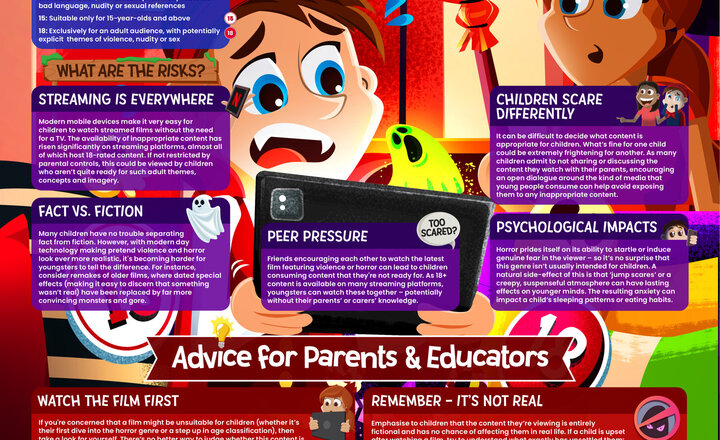
Online Safety - Horror Films and Age Ratings.
Ofcom’s latest Media Use and Attitudes Report states that most children can watch streamed films on a mobile device both in and out of the home, with 80% of UK children watching films on phones, tablets or laptops. That’s a lot of youngsters who might be using their own gadgets to watch something suitably spooky this Halloween season or perhaps, something a little too frightening. With older children in particular, it can be difficult knowing how to manage their increasing interest in more mature content – including horror films, in many cases – let alone knowing how best to safeguard them from inappropriate material. Our free guide offers expert advice not only on the risks of exposure to horror films and other potentially upsetting content, but also on preventing young viewers from seeing this material or protecting them from being too deeply affected by it if they do.
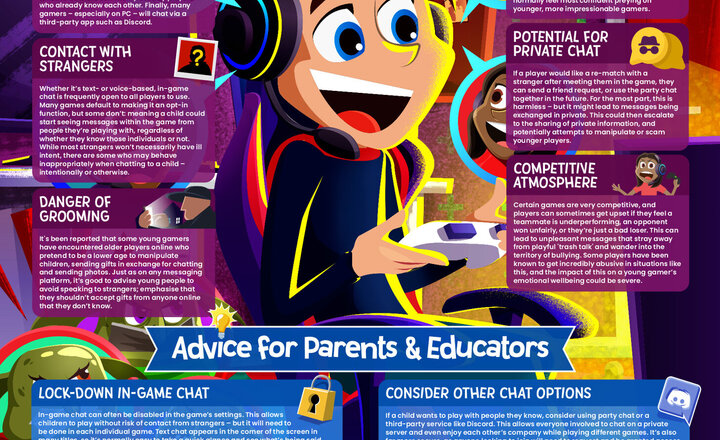
Online Safety - In Game Chat
If you’ve played or seen any online games from the past few years, you’ve probably noticed that almost every title of this kind has some kind of chat functionality. Whether allowing players to send text messages to one another or letting them use their mics to chat together on voice if you’re on a multiplayer game, chances are you can talk to your fellow gamers, one way or another. Sadly, such a function comes with its fair share of risks – as is to be expected with a feature intended to connect gamers from around the world and it is immensely important for parents and educators to understand these concerns and help young players address them. That’s why we’ve put together this free guide, breaking down the most prevalent issues associated with in-game chat and letting you know how to keep youngsters as safe as possible if or when they’re exposed to this feature.
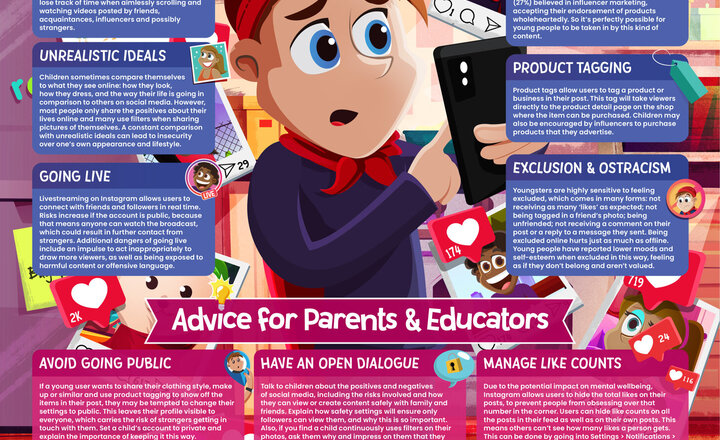
Online Safety - Instagram
Instagram is one of the most well-known social media platforms around, frequented by users of all ages all over the world, and allowing them to share photos and videos with friends, family and the wider public if they wish. The site has many younger users, allowing people as young as 13 to create an account and engage with its community. As a popular choice of platform for teenagers, it's vital that parents and educators understand the risks associated with the site and what can be done to mitigate them. This free guide lets you know about the most prominent safety concerns on Instagram, offering expert advice on how to make young people’s experiences on the app as secure as possible.
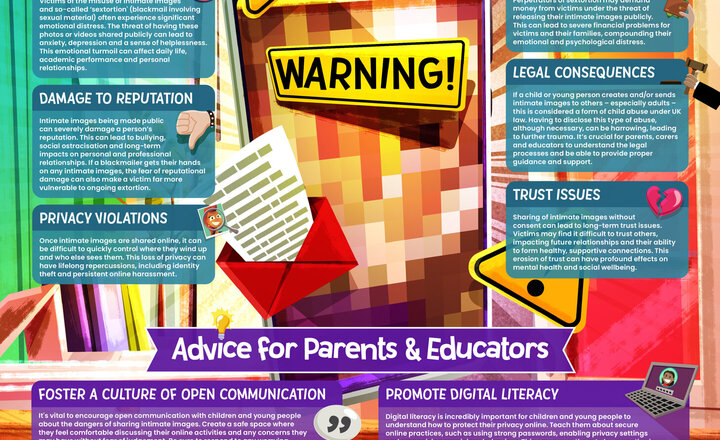
Online Safety - What Parents Need to Know About Sharing Images
The sharing of intimate images online can be a dangerous avenue through which abusers seek to exploit children and young people, forcibly exposing them to explicit material, coercing them into sharing self-generated intimate images, and extorting them with the threat of sharing such images more widely. From reputational impact to potential blackmail or emotional distress, and even legal consequences, exposure to this harmful behaviour can have a severe impact. It’s important to remember that the creation and distribution of explicit material featuring under-18s – even by the child themselves – is illegal under UK law. Our guide looks at the serious concerns associated with this behaviour, and lets parents and educators know how best to address these issues and protect young people. Sources https://www.childline.org.uk/
Online Safety - Online Trolling
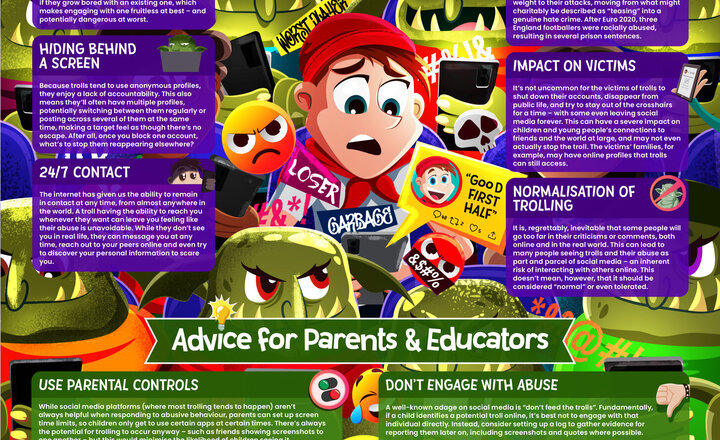
The term “trolling” refers to sending hurtful or provocative comments – often done anonymously online – to provoke a reaction or cause emotional distress. Anonymity can embolden people into saying things they wouldn’t dare say in person. Euro 2024 and other tournaments tend to put an emphasis on this, with the abuse of both players and fans often increasing during such events. This free guide explores the phenomenon of online trolling, detailing its risks and letting you know how to safeguard children from this harmful behaviour. Some people online simply get a kick out of hurting people’s feelings, making it their mission to get a rise out of anyone they encounter. These people – known as “trolls” – are known for intentionally engaging in offensive or abusive behaviour to upset others online or provoke them into sinking to their level. At the height of events such as Euro 2024, when rivalries between various supporters reach an apex, trolling tends to see a bit of an uptick. Unfortunately, while “just ignore them” is genuinely good advice, it can prove very difficult to put into practice. This is especially true for children and young people, who are often still learning how to manage their emotions and sometimes react impulsively to name-calling and other mistreatment. This Wake up Wednesday, however, we’re offering expert guidance on how to keep youngsters safe from online trolling – both avoiding it entirely and responding to it effectively. Sources https://www.esafety.gov.au/young-people/trolling https://www.theguardian.com/football/2021/nov/03/football-fan-jailed-for-racially-abusing-rashford-sancho-and-saka-after-final-euro-2020 https://www.dailymail.co.uk/sport/football/article-13359555/Tottenham-fan-hurls-abuse-Declan-Rice-heads-exit-corner-leads-Arsenals-goal-thrilling-win-Tottenham.html
What You Need to Know about Gambling
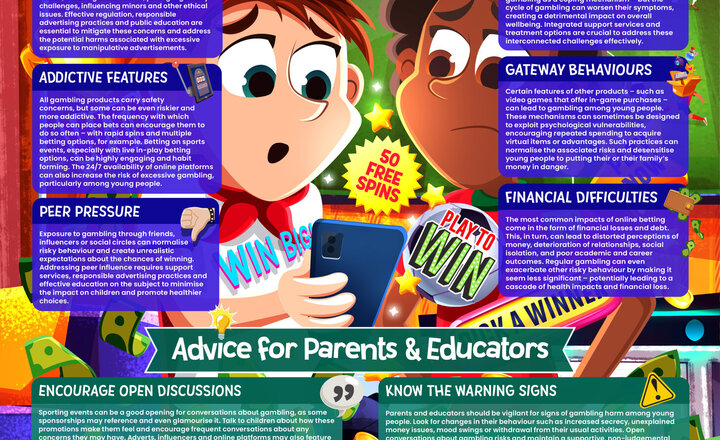
Online gambling has become more prevalent over the years, with such practises widely advertised on social media and even incorporated into various apps and games. It’s growing easier for children and young people to come across opportunities to gamble online, putting parents at greater risk of financial loss or mental and emotional strain. That said, there are steps you can take to keep these youngsters as safe as possible from the impacts of gambling, and our free guide details these for you. At the same time, our expert points out the most significant risks posed to under-18s, to help you keep these damaging pitfalls to a minimum. Support Services NHS National Centre for Behavioural Addictions and the National Problem Gambling Clinic NHS Northern Gambling Service website NHS Southern Gambling Service website NHS West Midlands Gambling Harms Clinic website NHS East Midlands Gambling Harms Clinic website NHS East of England Gambling Service website NHS South West Gambling Service website https://www.gamcare.org.uk/about-us/what-support-do-we-provide/ Sources https://www.leeds.gov.uk/one-minute-guides/gambling-and-young-people Gambling Commission - Young people and gambling 2023 https://www.gamblingcommission.gov.uk/PDF/Measuring-GRH-in-CYP-A-framework-for-action.pdf https://bigdeal.org.uk/ https://parentzone.org.uk/article/pressure-to-spend https://harmreductionjournal.biomedcentral.com/articles/10.1186/s12954-018-0220-3 https://www.problemgambling.ca/gambling-help/gambling-information/about-slot-machines.aspx#near_misses https://link.springer.com/article/10.1007/s10899-017-9701-7 https://www.apa.org/monitor/2023/07/how-gambling-affects-the-brain https://www.itn.co.uk/media-centre/exclusive-5-news-study-university-bristol-business-school-exposes-alarming-scale#:~:text=Across%20all%20media%20channels%20examined,or%20115%20messages%20every%20hour. https://www.gambleaware.org/sites/default/files/2020-12/pbhm-final-report-december-2016.pdf
Wake Up Wednesday - Encouraging Healthy Friendships
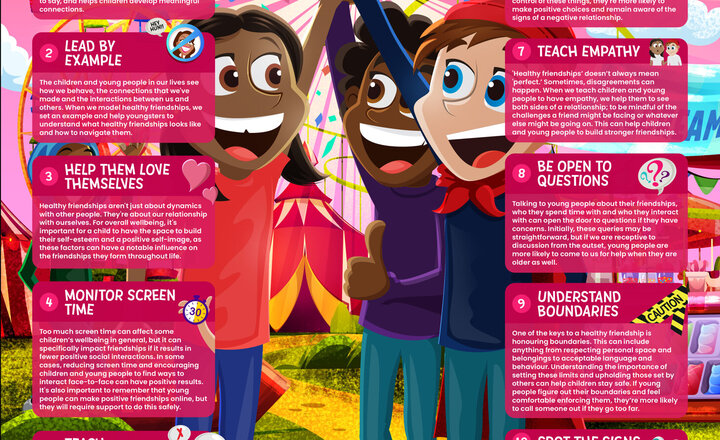
It’s common for young people to have comparatively less of an understanding of social conventions. While children can benefit from this to some degree – making friends at the drop of a hat – this can also generate a good deal of confusion regarding certain aspects of any relationships that they form.
Year 3 - Computing - Adding an Attachment to an Email.
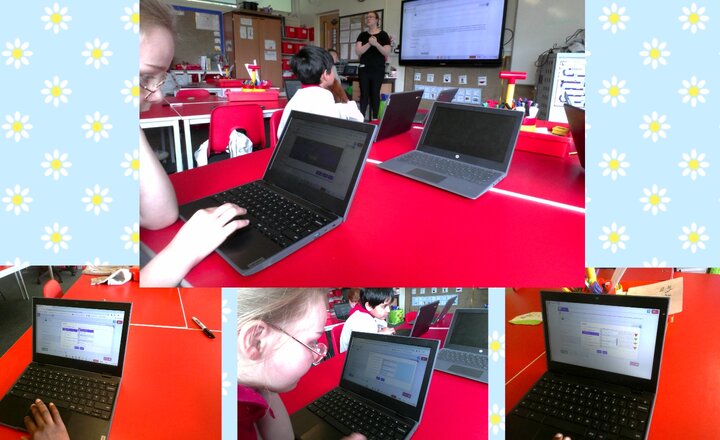
In our computer lesson today Year 3 have been learning how to add an attachment to an email. They had to reply to an email from the King then attach the safety quiz that they had made last lesson.
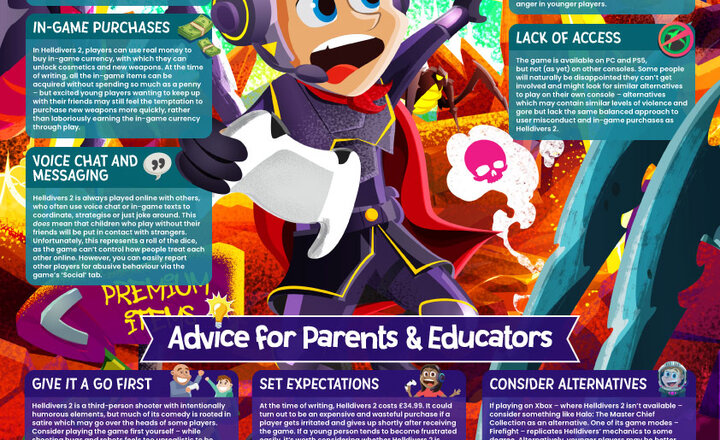
Online Safety - Helldivers 2
Within the last few months, Helldivers 2 has propelled to immense popularity in the gaming community, with players of all ages enjoying its frenetic combat, humorous presentation, and challenging gameplay. Whether they’re cooperating with friends or competing with strangers, the game has attracted many young players despite its higher age rating. As can be expected from an online game – especially one rated 18+ – there are several inherent online safety risks posed to children and young people who play Helldivers 2; from the content of the game itself to the dangers of interacting with strangers online. Our guide highlights the most prominent hazards of Helldivers 2 and provides you with top tips for keeping its younger players safe.
.png)